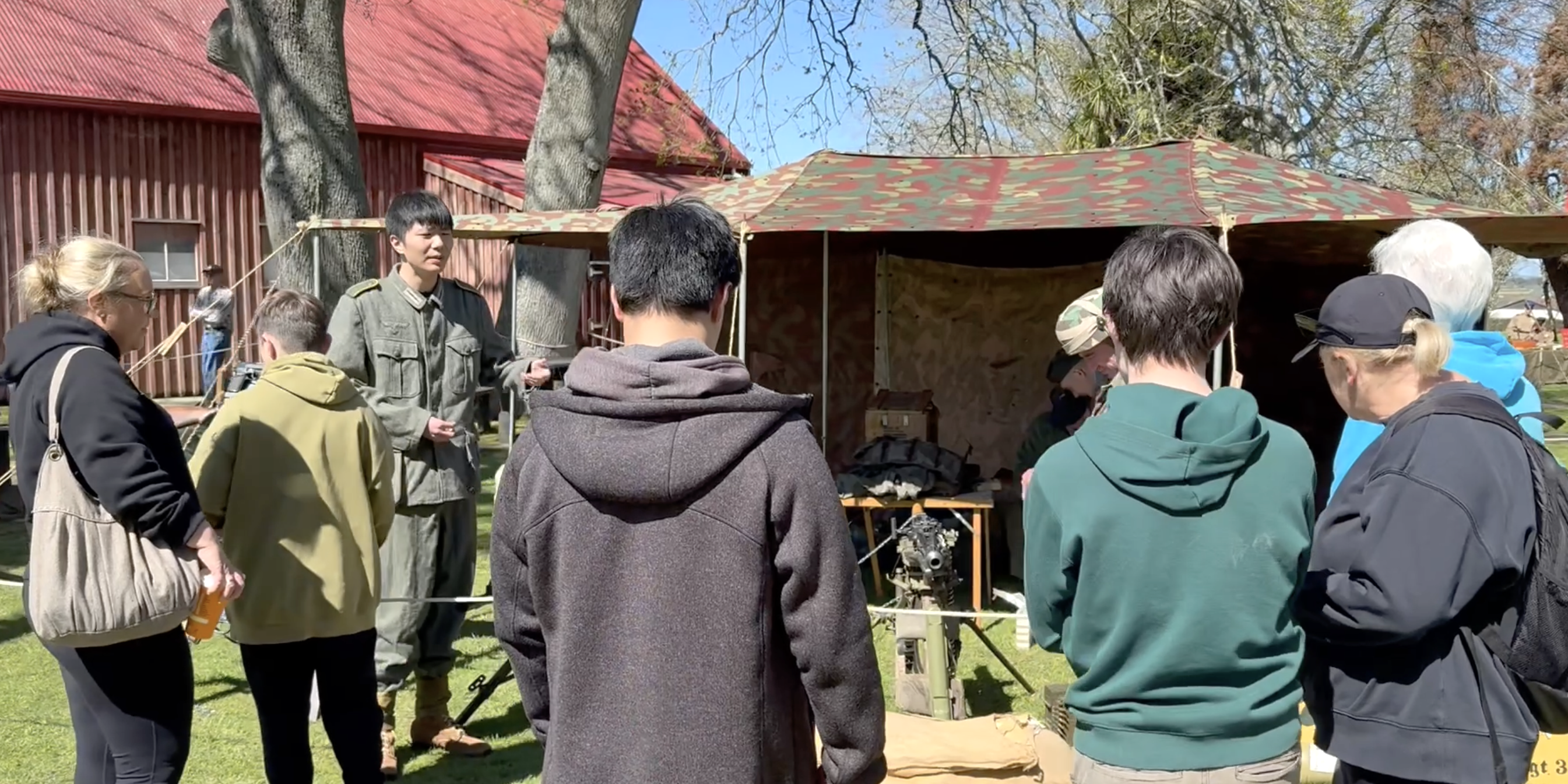
Staring at this photo of me in a World War II-era New Zealand military uniform, the “NEW ZEALAND” patch on my shoulder still feels rough with the texture of woolen fabric—and in an instant, I’m plunged right back to the war reenactment club event. The tank tracks on the grass, the diesel fumes from the armored vehicle, the cold sweat beading on my comrade’s forehead during the simulated battlefield first aid… all of it is so much more vivid than any photo.

When I first joined the club, I saw it as just an “immersive history experience”: getting to touch “the real stuff” (carefully reproduced, of course), wear vintage military gear—how cool could that be? It wasn’t until my first “performance” that I realized beneath the “cool” surface lay heavy, meaningful details. Take this uniform I’m wearing, for example: the woolen jacket had to be made from fabric with the exact same density as the originals from back then; the helmet liner was adjusted to match veterans’ memories—“a bit scratchy but still protective”; even the width of the pant cuffs was revised over and over, compared against old pieces in museums. The club seniors always said: “We’re not reproducing for reproduction’s sake. We want anyone who puts this on to understand—this is the same cloth soldiers wrapped themselves in before charging into a hail of bullets.”
That rumbling armored personnel carrier in the video was the “star” of the event. I sat in the passenger seat, watching the driver uncle mutter as he worked the controls: “My grandpa drove this exact model back in the day. He said the scariest thing was hearing a ‘whoosh’ right next to the vehicle while driving—that’s the sound of a bullet whizzing past…” During the “ambush simulation,” my comrades jumped out of the back of the vehicle using the exact “infantry disembarkation tactics” from after the D-Day landings. No one treated this like a “game”; we took it so seriously that once, someone even snapped the strap of their prop gun.
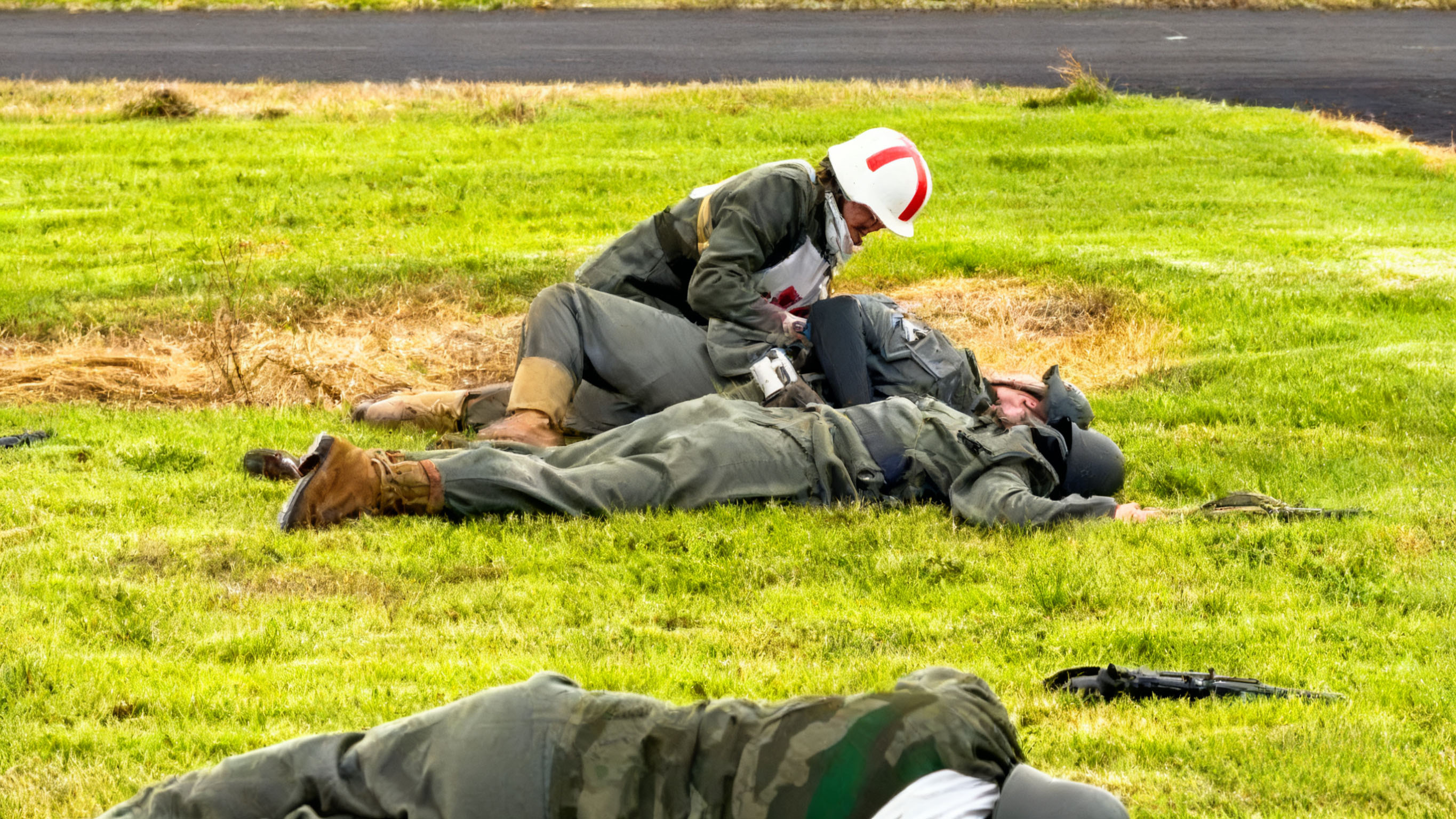
But the moment that hit me hardest was the simulated “battlefield first aid” segment. In the video, you can see my comrade with the red-and-white marked helmet kneeling over a “wounded soldier” to administer first aid—and back then, I was lying right next to them, playing a “fallen soldier.” With my eyes closed, I heard them gasping and shouting, “Medic! We need a medic here!” The cold of the grass seeped through my uniform, and suddenly, I thought of the battlefield letters home I’d read in textbooks—those young soldiers had also lain in cold mud, hoping someone would pull them up. When the “scene” ended, we all climbed to our feet. The playful grins were gone from our faces, and we quietly brushed the grass off our clothes.
Now, looking back at these photos and videos, I’m so glad I never treated “war reenactment” like a game. Those carefully reproduced uniforms and vehicles, our awkward yet sincere “performances”—they’re really a “thread” handed to us in peacetime. If we follow that thread back, we can touch the real fear, courage, and desire to “survive” that lived in history. And the fact that we can now stand in the sun, laughing as we talk about these “reenactments”? That in itself is the best interpretation of peace.